
Daggerheart has three standard conditions: Hidden, Restrained and Vulnerable. They're simple to run and easy to lose track of in the middle of a fight. This guide covers what each one does and when it ends, and offers a free set of condition rings (token rings you place around a creature's token) that show them at a glance.
Hidden
You're Hidden while you're out of sight of every enemy and none of them otherwise knows where you are. The benefit is that any roll made against a Hidden creature has disadvantage, so attacks against you are harder to land.
It ends three ways: an adversary moves to a spot where they'd see you, you step into their line of sight, or you make an attack. Hiding is a way to set up a good moment, not a place to stay. If you're not sure a character is still Hidden, ask whether any enemy could point to where they are. If one could, they aren't.
Some classes improve on it. The SRD's Rogue is Cloaked instead of Hidden, which keeps them unseen in a few extra situations, and the Nightwalker subclass's Vanishing Act feature lets them vanish on demand and frees them from Restrained.
Restrained
A Restrained character can't move, but can still take actions from where they stand. They can attack, cast and speak. They just can't leave.
The standard rule doesn't give Restrained an end of its own. Whatever puts the condition on a creature, such as an adversary's grab or a spell, says how to get free, and that text is the one to follow. The SRD does say what a temporary condition is: one the creature can clear by making a move against it. For a PC that usually means an action roll with a fitting trait. For an adversary, the GM spends its spotlight and describes how it breaks free, with no roll.
Vulnerable
While a creature is Vulnerable, every roll that targets it has advantage. It's the opposite of Hidden.
The standard rule gives no timer here either. A feature that makes a creature Vulnerable says how long it lasts. One case comes from the core rules: a character who marks their last Stress becomes Vulnerable until they clear at least 1 Stress.
Rules that apply to all three
Between the standard conditions and the special ones, a busy fight can have a lot of status effects going at once. That's the case for a visual marker.
Free condition rings
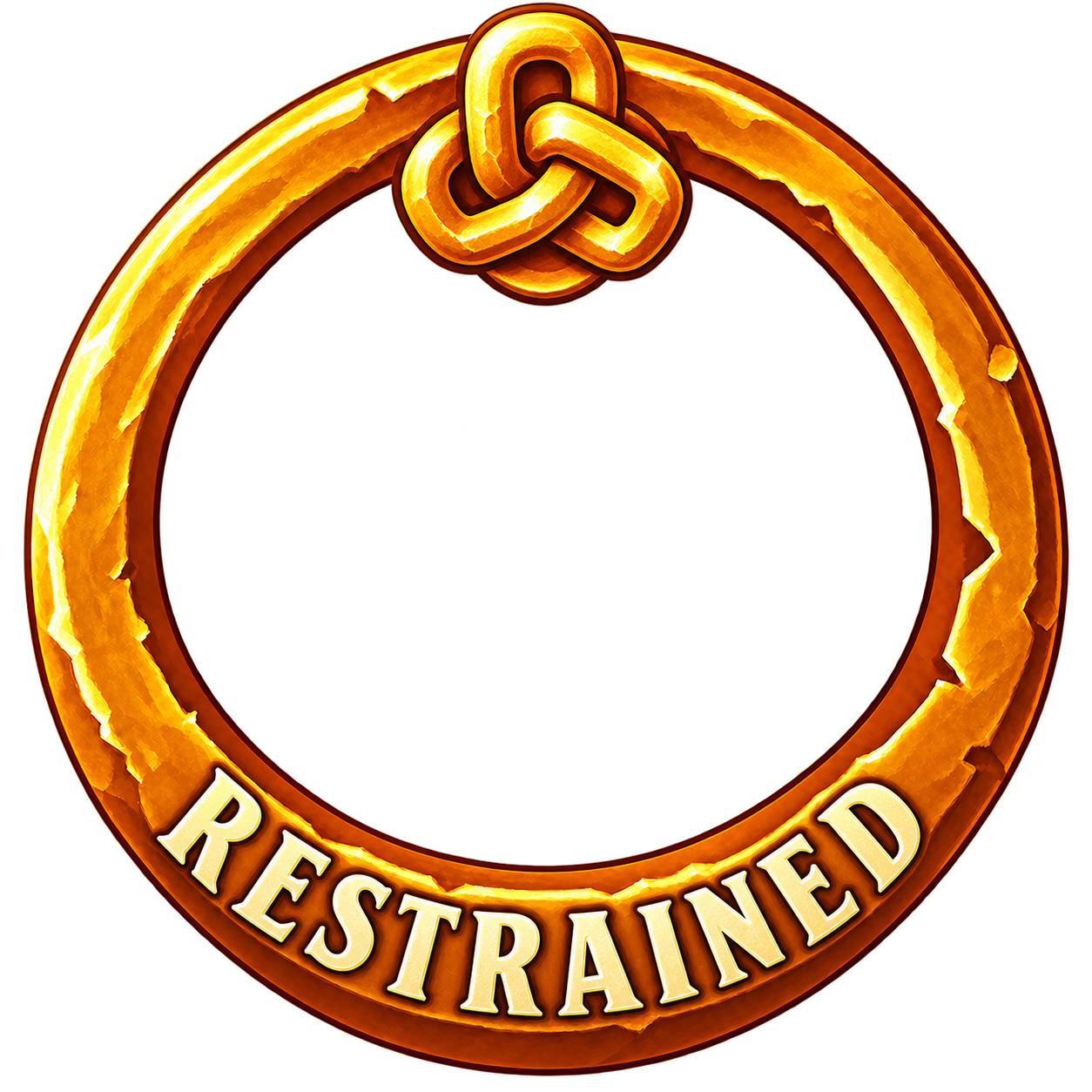
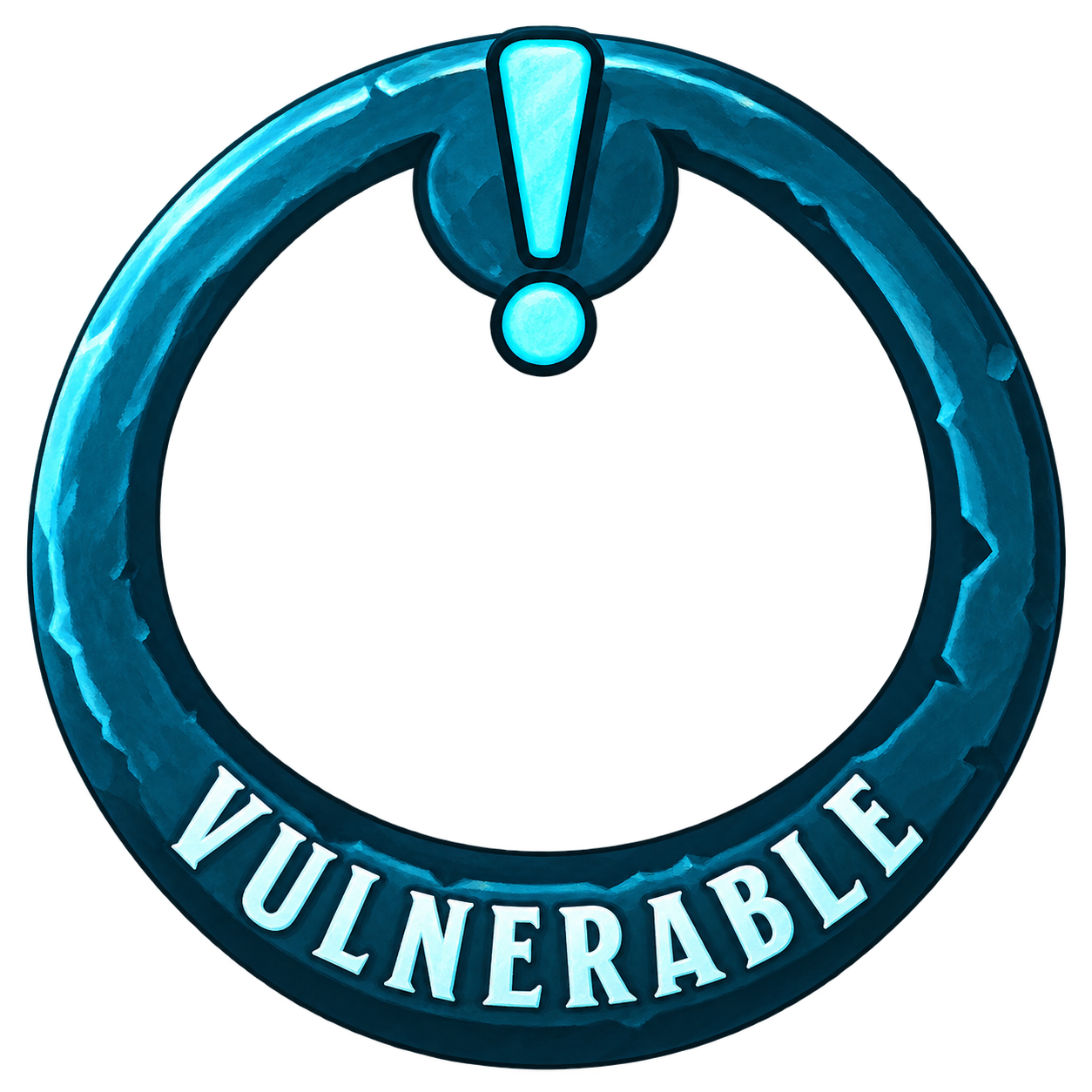
These condition rings are one for each standard condition, drawn to sit around a creature's token. Put one under a token in your virtual tabletop, or print them and set a miniature on one at a physical table. Everyone can see who's Hidden, Restrained or Vulnerable without asking.
-
 Hidden
Download PNG
-
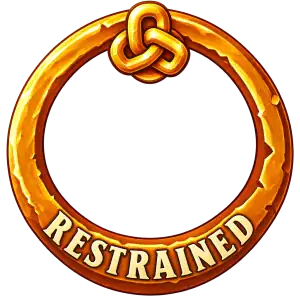 Restrained
Download PNG
-
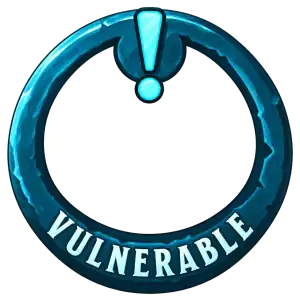 Vulnerable
Download PNG

While you're here, check out Roll Call, the auto-scheduler for your Daggerheart games. (Discord bot available!)
Using them at the table
- Drop the ring that matches the condition under the creature's token.
- Take it away the moment the condition ends: when the Hidden character attacks, or when the Restrained creature breaks free.
- Say the condition out loud when you place the ring, so the whole table knows what it means and what it does to their rolls.
- For a creature with two conditions, stack two rings, or use one and note the other.
Curious how often a roll succeeds? The Daggerheart dice odds guide charts every outcome, and the chart on its own page is easy to bookmark. Both leave out advantage and disadvantage, which Hidden and Vulnerable add, so they show the plain roll.
Scheduling a Daggerheart table
Roll Call works out when your players are free and proposes the best times, whatever system you play. Read how scheduling works, or set up a first campaign in a few minutes.
Daggerheart is a trademark of Darrington Press, LLC. Roll Call is not affiliated with or endorsed by Darrington Press or Critical Role. This guide copies no rules text, and the condition rings are original art. The rules are Darrington Press's, under its Community Gaming License.
This product includes materials from the Daggerheart System Reference Document 2.0, © Critical Role, LLC. under the terms of the Darrington Press Community Gaming (DPCGL) License. More information can be found at https://www.daggerheart.com. There are no previous modifications by others.